The forex market, also known as the foreign exchange market, is the largest and most liquid financial market in the world. Every day, trillions of dollars change hands as currencies are exchanged between banks, institutions, governments, businesses, and individual traders. Unlike stock markets, which are limited by location and trading hours, the forex market operates globally and continuously throughout the week.
For many people, the forex market represents opportunity, flexibility, and global exposure. At the same time, it is often misunderstood and surrounded by myths. Some see it as overly complex, while others believe it is an easy way to make money. The truth lies somewhere in between.
This article provides a comprehensive and beginner-friendly explanation of the forex market. It is written in clear, natural English, designed to educate readers, improve SEO performance, and remain fully compliant with Google AdSense guidelines.
What Is the Forex Market?
The forex market is a global marketplace where currencies are bought and sold. Every transaction involves exchanging one currency for another. This is why currencies are always traded in pairs, such as EUR/USD, GBP/USD, or USD/JPY.
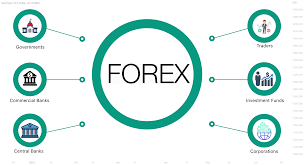
The primary purpose of the forex market is to facilitate international trade and investment. Companies need to exchange currencies to pay for goods and services across borders. Governments and central banks participate to manage reserves and stabilize economies. Traders and investors participate to speculate on price movements.
Because currencies are essential to the global economy, the forex market is active, liquid, and constantly evolving.
A Brief History of the Forex Market
The modern forex market has evolved significantly over time. In the past, currency values were often tied to physical assets such as gold. Under the gold standard, currencies had fixed exchange rates based on gold reserves.
This system gradually changed, and in the early 1970s, major economies moved toward floating exchange rates. Currency values were no longer fixed but determined by supply and demand in the open market.
The introduction of electronic trading and online platforms transformed the forex market even further. What was once dominated by banks and institutions became accessible to individual traders around the world.
How the Forex Market Works
At its core, the forex market operates on supply and demand. When demand for a currency increases, its value rises. When demand decreases, its value falls.
Currencies are quoted in pairs. The first currency is the base currency, and the second is the quote currency. The price shows how much of the quote currency is needed to buy one unit of the base currency.
For example, if EUR/USD is trading at 1.1000, it means one euro is worth 1.10 US dollars. Changes in this price reflect shifts in economic conditions, interest rates, and market sentiment.
Major Participants in the Forex Market
The forex market includes a wide range of participants, each with different goals and strategies.
Central banks play a critical role by influencing interest rates and managing currency stability. Their decisions often cause significant market movements.
Commercial banks and financial institutions conduct large transactions for clients and for their own trading operations. These institutions provide liquidity and shape overall market activity.
Corporations participate in the forex market to hedge currency risk related to international business operations.
Retail traders, using online brokers, represent a smaller portion of total volume but contribute to market diversity and global participation.
Trading Sessions and Market Hours
One of the most attractive features of the forex market is its 24-hour trading cycle. The market operates five days a week, following the global business day.
The main trading sessions are the Asian, European, and North American sessions. Each session has unique characteristics in terms of volatility and trading volume.
The overlap between the London and New York sessions is typically the most active period, offering higher liquidity and stronger price movements.
This continuous structure allows traders to choose trading times that fit their schedules and strategies.
Currency Pairs Explained
Forex currency pairs are generally divided into three categories: major, minor, and exotic pairs.
Major pairs include the US dollar and one other major currency, such as EUR/USD or USD/JPY. These pairs are highly liquid and have tight spreads.
Minor pairs do not include the US dollar but involve other major currencies, such as EUR/GBP or AUD/JPY.
Exotic pairs involve one major currency and one from a developing economy. These pairs tend to be more volatile and carry higher risk.
Understanding these categories helps traders choose suitable instruments based on experience and risk tolerance.
The Role of Leverage in the Forex Market
Leverage allows traders to control larger positions with a smaller amount of capital. This feature is one of the most distinctive aspects of the forex market.
For example, leverage enables a trader to open a large position while only committing a fraction of the total value as margin.
While leverage increases potential profits, it also increases potential losses. Responsible use of leverage is essential for long-term success in the forex market.
The true benefit of leverage lies in flexibility, not excessive risk-taking.
Forex Trading Platforms and Technology
Modern forex trading relies heavily on technology. Online trading platforms provide access to real-time price data, charts, indicators, and order execution tools.
Many platforms offer customizable interfaces, allowing traders to tailor their workspace to their needs. Mobile trading apps provide additional flexibility, enabling traders to monitor positions on the go.
Technological advancements have significantly reduced barriers to entry and improved transparency in the forex market.
Types of Forex Analysis
To navigate the forex market, traders rely on analysis. The two primary types are fundamental analysis and technical analysis.
Fundamental analysis focuses on economic data, interest rates, inflation, employment figures, and geopolitical events. These factors influence long-term currency trends.
Technical analysis involves studying price charts and indicators to identify patterns and potential entry and exit points.
Many traders combine both approaches to gain a broader perspective on market conditions.
Risk Management in the Forex Market
Risk management is a crucial element of forex trading. Without it, even a few poor decisions can lead to significant losses.
Common risk management tools include stop-loss orders, position sizing, and diversification. These tools help traders limit losses and protect capital.
Successful traders focus on consistency rather than short-term gains. Managing risk allows them to stay in the market long enough to develop skills and experience.
Advantages of the Forex Market
The forex market offers several advantages that attract traders worldwide. High liquidity ensures smooth trade execution and competitive pricing.
The ability to trade both rising and falling markets provides flexibility and opportunity in different economic conditions.
Low entry barriers and access to demo accounts make the forex market approachable for beginners.
These advantages contribute to the growing popularity of forex trading globally.
Challenges and Risks of the Forex Market
Despite its benefits, the forex market carries real risks. Price volatility can lead to rapid losses, especially when leverage is misused.
Emotional trading, lack of education, and unrealistic expectations are common challenges for beginners.
Understanding these risks and approaching the market responsibly is essential for long-term participation.
The Importance of Education and Discipline
Education plays a vital role in navigating the forex market. Learning market mechanics, trading strategies, and risk management techniques builds a strong foundation.
Discipline helps traders follow their plans and avoid impulsive decisions driven by fear or greed.
Together, education and discipline support sustainable trading practices.
Forex Market Regulation and Safety
Forex regulation varies by country, but regulated brokers are required to follow specific standards designed to protect clients.
Choosing a regulated broker helps reduce risks related to fraud and mismanagement.
While regulation does not eliminate trading risk, it adds an important layer of security.
The Forex Market and the Global Economy
The forex market reflects global economic conditions. Currency values respond to interest rate changes, economic growth, political stability, and market confidence.
By observing forex movements, traders gain insight into broader economic trends.
This connection to the global economy makes forex trading both educational and informative.
Who Should Consider the Forex Market?
The forex market suits individuals who enjoy learning, analysis, and self-discipline. It appeals to those who value flexibility and global exposure.
However, it may not be suitable for people seeking guaranteed income or minimal involvement.
Understanding personal goals and risk tolerance is essential before entering the market.
Long-Term Perspective on the Forex Market
Long-term success in the forex market comes from patience and continuous improvement. Profitable trading is rarely immediate.
Viewing forex trading as a skill rather than a shortcut leads to healthier expectations and better outcomes.
Consistency and responsible decision-making are key.
The Future of the Forex Market
The forex market continues to evolve with advancements in technology and changes in global finance.
Automation, artificial intelligence, and improved data access are shaping how traders interact with the market.
Despite these changes, the fundamental principles of supply, demand, and risk management remain constant.
Final Thoughts on the Forex Market
The forex market stands as a central pillar of the global financial system. Its size, liquidity, and accessibility make it unique among financial markets.
When approached with education, discipline, and realistic expectations, the forex market can offer valuable opportunities and insights.
Understanding how the forex market works is the first step toward responsible participation in one of the world’s most influential financial arenas.
Summary:
Trading Forex may be one of the most profitable businesses that you can find today. It is an interesting market which has turned many traders into millionaires. If you . . .
Keywords:
Forex, forex market, trade forex, currency trading, day trading, day traders, become rich trading
Article Body:
- This article is divided into three sections. The first section is for beginners. The second section is for advanced traders. The third section is for everyone.
Section #1. For beginners . . .
On this article I will briefly describe what the Forex Market is for those who don’t know about this subject. Also I will describe other trading opportunities that exist today on the Internet. I think that trading is one of those dream businesses that many people rush into, but to start trading online without the required knowledge could be a big mistake.
What’s appealing about this business opportunity is the financial freedom it can bring to your life. Successful traders make lots of money working from home with their computers. Keep in mind that on this business . . .
1) You don’t have to create any product.
2) You don’t have to advertise anything.
3) Basically you just invest some money and multiply it more and more.
There are different trading opportunities on the Internet nowadays. I think that the hottest of them right now is The Forex Market. I will explain you why.
Currencies from many different countries were backed up by gold about one hundred years ago. It was called The Gold Standard. This basically meant that to print certain amount of paper money a predetermined amount of gold was needed. Also you could walk into the bank and request that your currency bills would be converted to gold. Then you could leave the bank with the gold.
This was a treaty between many countries and it lasted a few decades. Suddenly something happened that changed everything. Due to economic circumstances The Gold Standard was changed into a more flexible economic system.
Now, most countries were not required to back up their currencies with gold anymore, as long as they backed up their currencies with US dollars, everything was OK. Eventually this didn’t work well either. So, at the beginning of the 70’s decade this rule was totally abandoned and currencies started to float freely on the market.
This means that since that era until present time world currencies are not backed up by gold anymore, nor are they backed by any other particular type of money either. There are exceptions though. For example, some currencies of European countries are pegged to the Euro. Their exchange rate is fixed.
The same happens with the US dollar in relationship with other no so popular currencies. That’s another story that I won’t explain right now. The point is that most currencies change in value freely on the Forex Market today. Forex is an acronym for Foreign Exchange Market.
For a long time this market was reserved only for ‘BIG BROTHERS’. In order for you to access this market you needed astronomical amounts of investment capital.
Everything changed with the computer age. As I have always said, everything is easier on the Internet. So, new online brokers emerged that allowed ‘the little guys’ play this game. Now you can open an account with as little as $300 when you needed millions just to think about starting on this business a few years ago.
The good thing about this market is the huge leverage you get. The brokers usually lend you up to 100 times as much as you have for trading. What does this mean? For example, if you open an account with 1,000 US dollars, you can control, as much as 100,000 units of the foreign currency.
Let’s say that the EUR/USD pair is trading at 1.2000. In that case with 1,000 US dollars you can purchase approximately 80,000 Euros. The broker lends you the money to do it!
Anyway this is a very interesting topic but it is also wide. I can’t give you all the details in here. So, I will proceed to share some advanced ideas for advanced traders and then I will tell you about other trading opportunities on the Internet.
Section #2. For advance traders . . .
Many traders are looking for the perfect trading system. They want to find the Holy Grail of Trading, which is an entry strategy that allows them to win, win, win and never lose. Even advanced traders fail because of this. They can’t realize where the money is made.
Online trading can be regarding and profitable but you have to take it seriously. One of the biggest trading secrets of all is that you should use proper money management techniques as well as trading sizing strategies. That’s how the BIG DOGS make the money.
Small traders know that they can’t be always right. There is not such a thing as the perfect win, win, win and never lose strategy. If something like that exists then very few people know about it. Still, how do you think that many traders can be profitable month after month, year after year? How can they be consistently profitable?
I already gave you the answer above. The secret is on your money management techniques and your trading sizing strategies. Also, it is important to find a good entry and exit trading system.
If you combine these three aspects of trading above, you are almost guaranteed to succeed at it. This is easy once someone teaches you how to do it. Moreover, if you like this business you will have plenty of time to practice your strategies before you start trading with real money. In my book Easy Web Riches you can find valuable information about this subject.
Section #3. For everyone . . .
What else can you do to make money on the Internet without creating anything and without selling other people’s stuff? You will find many other trading opportunities out there. For example, there are advance techniques to trade on the Stock Market that most people don’t know. These are strategies that allow you to trade like a real professional.
Also there are other markets where you can make a lot of money. Many people don’t know about The Futures Market. They have never even heard about it. I find that some traders are also interested in the options markets. You see, it is a matter of choosing what is right for you.
The Futures Markets is a market where farmers, big corporations, financial institutions and small traders, trade contracts on commodities, which will be executed at some time in the future. This market has existed for hundreds of years but today people trade commodities on the Internet like stocks and currencies.
Options are derivative financial contracts. They derive their value from the underlying securities, commodities, Futures contracts, etc. Options can explosively multiply your buying power, but they are dangerous too. They are always recommended for advanced traders only, not for the novice.
As you can see, there are different trading opportunities for you on the Internet. In fact there are others that I have not mentioned here. There is money to be made on these markets.
Once you learn the details, profiting from this business becomes quick and easy. Remember that this is a business in which you don’t have to create anything nor sell anything either. All you do is to invest your money and multiply it.
Copyright � 2005 – EasyWebRiches.com
Tinggalkan Balasan